
Osaka's Minami by Day and by Night: How the Same Streets Transform, Compared Side by Side from Minami-Horie to Dotonbori
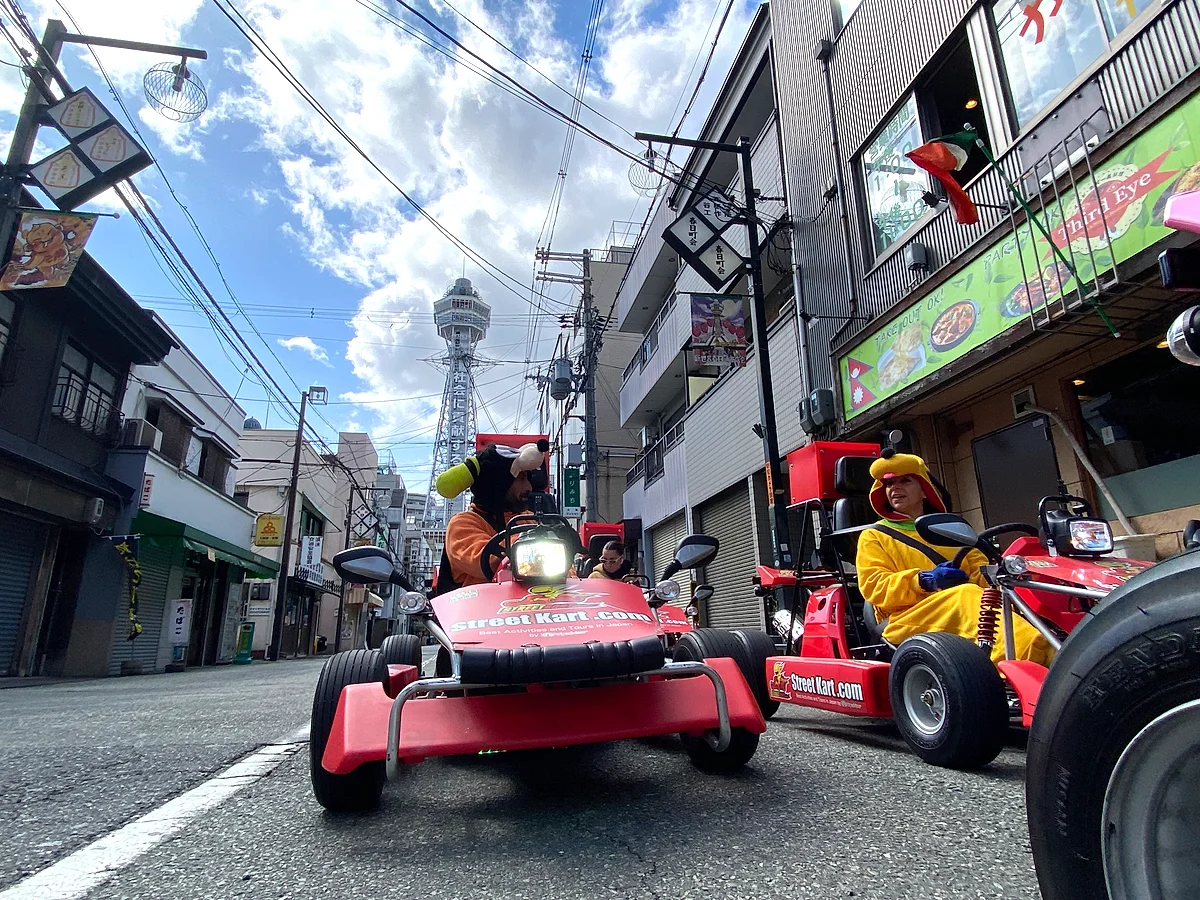
Osaka's Minami by Day and by Night: How the Same Streets Transform, Compared Side by Side from Minami-Horie to Dotonbori
Seen in daylight, Dotonbori's giant signs are almost disappointingly plain. They're just signs. You can see every joint in the steel frames and every patch of faded paint. Once the sun goes down, though, those same signs throw their light across the river and become the stars of the street.
As a local, I think this is what makes Minami so fun. Not many neighborhoods look this different from day to night. In this article, I'll follow the streets that run from Minami-Horie, home of Street Kart's Osaka store, through Amerikamura and Shinsaibashi to Dotonbori, paying attention to how the scenery shifts. I'll also lay out how a couple short on time can plan where to go, what to see, and where to take photos.
Why Does the Same Neighborhood Look So Different by Day and by Night?
Minami's streetscape is made up almost entirely of signs and shop lights. So when the light changes, the whole feel of the place changes with it.
During the day, the sun lights everything evenly. Building shapes, street widths, what's in the shop windows: you take it all in at once. There's so much information that your eyes never get a rest. That's Minami in the daytime.
At night, only the things that glow catch your eye. The dark parts fade into the background, and the neon, the signs, and the shopfront lights stand out. It's as if someone redrew the outline of the city in dots and lines of light.
If you've ever walked through a night market in Taiwan, you'll know how the stall lights turn a daytime alley into a completely different place. Minami is a lot like that. The difference is that here the light doesn't come from stalls. It comes from the building walls themselves. As you look up, layer after layer of light stacks on top of each other, which gives the whole scene real depth.
One thing before we start: when the sky gets dark varies a lot by season. At the same hour, a summer sky and a winter sky look nothing alike. I can't give you a set time for the night view, so look up the sunset time for when you're traveling before you go.
Minami by Day: When You Can Read Every Word on the Signs
Street Kart's Osaka store is in Minami-Horie, a neighborhood full of stylish shops and cafés. It has a feel similar to Daikanyama or Ura-Harajuku in Tokyo.
Let me take a quick detour. "Horie" and "Yotsubashi" both have water in their names: hori means canal, and hashi means bridge. This area used to be crisscrossed by canals. Yotsubashi, for example, means "Four Bridges," because four bridges once crossed the spot where two canals met in a cross. The canals have since been filled in and turned into wide roads, but the place names still hold a memory of the water. Once you know this, even a straight street starts to look a little different.
Back to the main topic. Daytime Minami-Horie is quiet. It sits a little off the center of Minami, so the streets have some breathing room. Storefronts, potted plants, glimpses of interiors through the glass: this is the time of day when you can actually take in each design.
The nearby Yotsubashi and Horie area also looks like a laid-back shopping district in the daytime, with young people wandering around. The signs are low-key, so you notice the colors and materials of the buildings themselves. If you like cafés, a short walk around here before your tour will show you a quieter side of Osaka.
About five minutes on foot from Minami-Horie is Amerikamura (America Village). It's lined with vintage clothing shops and streetwear stores, and people gather around Triangle Park at its center.
By day, Amerikamura is all about color. The patterns of vintage clothes hanging outside shops, painted walls, signs that look hand-lettered. In sunlight, the colors look exactly as bright as they really are. If you want photos where the colors come out well, daytime is easily the best choice. Honestly, that's one advantage night can't match.
Shinsaibashi is one of Osaka's best-known shopping districts. The covered Shinsaibashi-suji Shopping Street is busy from the afternoon on.
Another short aside. The name "Shinsaibashi" comes from Okada Shinsai, a man who built a bridge across the Nagahori Canal in the early Edo period. "Dotonbori" works the same way: it's named after Yasui Doton, who started digging the canal. So the two biggest names in Minami both come from people. I suppose Osakans like to carve the names of the people who built things into the city itself.
Past that is Dotonbori. In daylight, it really is an exhibition of 3D signs. The moving legs of the Kani Doraku crab, Kuidaore Taro's face, the sheer size of the Glico sign. The fine details that get lost in the glow at night are easy to see during the day.
Look up from the Dotonbori River promenade and you can even see how the signs are attached to the building walls. If you've only ever seen the area at night, it's a small discovery.
Dusk: When the City's Colors Trade Places
Between day and night there's a time that's neither one. This is when you can feel the scenery change most directly.
While the sky is still a little blue, the sign lights come on one by one. At first they lose out to the daylight, and you can barely tell if they're on. As the sky darkens, the light from the signs slowly takes over. Before you know it, the glowing signs stand out more than the outlines of the buildings.
Watching this changeover is honestly moving.
For photos, this is the hardest time and also the most interesting. There's still color in the sky, and the city lights are on. This short window is the only time you can get both in one shot. You can take it on a smartphone, but the difference in brightness is large, so the result depends on whether you set the exposure for the sky or for the signs. Tap the sky on the screen if you want to keep the sky, or tap a sign if you want the signs to look sharp. That alone makes a big difference.
Keep in mind that the length of dusk also changes with the seasons. I can't promise you'll catch it if you arrive at a certain time, so the trick is to get there with plenty of time to spare.
Minami at Night: Light Redraws the Streets
At night, Dotonbori fully becomes a neon district. The light from the signs reflects on the Dotonbori River, creating two night views, one above and one below. What was "just a river" during the day becomes a ribbon of light at night.
When Yasui Doton dug the canal, I doubt he ever imagined the water would shine like this four hundred years later.
This is where the change in scenery is easiest to see. If you've looked at how the signs are built during the day, the way the lights layer at night becomes even more interesting. I also recommend taking the same shot from the same bridge, once by day and once by night. Put the two side by side and you'll see the change at a glance.
At night, the light in the Shinsaibashi arcade gets trapped under the roof. Against the darkness outside, the whole street looks like a bright box. It's a different, enclosed kind of brightness from the daytime.
Namba is Osaka's southern gateway and a lively area that's home to Namba Grand Kagetsu. At night, the crowds and the amount of light combine to make the whole area buzz with energy.
This may be surprising, but at night Amerikamura and Minami-Horie look much calmer than Dotonbori. The colors that stood out during the day sink into the darkness, leaving just a few scattered shop lights.
Come back here after soaking in Dotonbori's bright lights and you'll clearly feel the difference. Nighttime Minami isn't equally bright everywhere. Each area has its own "step" in brightness. You can only notice that because you went around and compared them.
Watching Minami Change from a Street Kart
Street Kart tours are led by a guide and follow a set route for each store. The Osaka store's tour passes through central Minami, including Amerikamura, Shinsaibashi, Dotonbori, and Namba. Because you follow a guide along a fixed route, you take in the changing streetscape as one continuous flow, and I think that's what makes it fun.
Speaking from my own experience, from the seat of a kart the scenery feels like one continuous ribbon, moving from quiet Minami-Horie to colorful Amerikamura to brightly lit Dotonbori. The borders between areas link up into a single line.
Ride during the day, and the colors and shapes of the city flow past you as they are. Ride at night, and the strong and weak light comes and goes like waves. Depending on which time you choose, the same route gives you a different experience.
Please check the official website (kart.st) for departure times and route details.
For Couple Photos, Wait Until You're Off the Kart
This part is important, so I'll be direct. While you're driving, focus on steering and staying safe around you. Driving while taking pictures on your phone is dangerous.
The reliable way to get photos is to walk around and take them before or after the tour. Traveling as a pair has the advantage that you can take turns being the photographer and the subject.
For daytime photos, the area around Triangle Park in Amerikamura is full of color, so you'll never be short of backgrounds. The calm streets of Minami-Horie are great for portraits with shopfronts in the background.
For night photos, the Dotonbori River promenade is hard to beat. Get the signs and their reflections on the water in the same frame, and you'll have a classic shot of Minami at night. It's a crowded area, so be careful about where you stop.
If you're posting to Xiaohongshu (RED) or Instagram, a "before and after" format showing the same spot by day and by night is an easy way to present it. Good hashtags include "#道頓堀" (Dotonbori), "#心斎橋" (Shinsaibashi), and "#大阪夜景" (Osaka night view). For Chinese-speaking audiences, "#大阪夜景" works as is, and "#道頓堀" gets the idea across in kanji. For travelers from countries that use Chinese characters, being able to read the place names as they are is a nice little bonus.
What Makes Street Kart Special: A Ride for Taking in the Scenery
First, every tour is led by a trained guide. Even if it's your first time in Osaka and you don't know your way around, you just follow the guide along the set route, which is reassuring.
Next is the view from the kart. You sit low to the ground and look up at the buildings and signs. You'll have to experience for yourself how Dotonbori's signs seem to loom right over your head.
Tours on the day are generally guided in English. Japanese and other languages depend on the staff working that day and are not guaranteed. If you have any concerns about language, it's a good idea to ask in advance. The website is available in 22 languages.
There are 9 stores across Japan (7 in Tokyo, 1 in Osaka, 1 in Okinawa). In Osaka, you'll ride from the Osaka store in Minami-Horie. The starting point is on the quieter side of Minami, so personally I'd recommend walking around the area before or after your tour.
As for track record, as of November 2023 there have been over 150,000 tours, more than 1.34 million total customers, and an average rating of 4.9/5.0 from over 20,000 reviews. All figures are totals across all stores as of November 2023.
Finally, it's a great fit for couples. The karts are single-seaters, so each of you gets to drive your own. You both see the same route, each from your own kart. Being able to ask "Did you see that sign?" afterward is something you only get from riding the same route together.
How to Compare Day and Night When Time Is Limited
If you're traveling as a pair and short on time, there's no need to take a tour both day and night. Take the tour at one time and explore on foot at the other. That's enough to feel the change.
For example, if you're taking a night tour, walk around Amerikamura and Shinsaibashi while it's still light out. If you've already seen the details of the signs and the colors of the streets during the day, then when you drive past at night you'll notice the difference: "So that's what it turns into."
On the other hand, if you ride during the day, I think it's nice to walk to Dotonbori after the tour and wait for the sun to set. The daytime city you watched flow past from the kart slowly turns into night, and this time you get to see it on your own two feet.
If you have extra time, add Kuromon Market (about 10 minutes by train) or Hozenji Yokocho (about a 20-minute walk) to see another side of Minami. Kuromon is known as "Osaka's Kitchen," and Hozenji Yokocho is a stone-paved alley. Both show you an Osaka that's different from the glowing signs.
Weekends tend to book up quickly, so we recommend reserving early. Please check the official website for how to book.
Driver's license requirements vary by country and license type. For details, please check the official website (kart.st).
Get to Know Osaka by Day, Then Go Meet Osaka at Night
By day, Dotonbori's signs are structures made of steel and paint. By night, they become the face of the city, casting their light onto the river. They're the same signs either way, and both are the real Osaka.
From the quiet streets of Minami-Horie to the colors of Amerikamura, the Shinsaibashi arcade, and the lights of Dotonbori. This city of bridges and canals named after people changes its look from day to night, all within a short distance. The photos you take comparing the two together are ones you'll want to line up and look back on after you get home.
Check departure times and the latest information on the Street Kart official website before you start planning.
This article was originally written in Japanese and translated using AI. Some expressions may read unnaturally, and we appreciate your understanding. For the most accurate and up-to-date information, please refer to the official site at kart.st.
Street Kart is not affiliated with Nintendo or the Mario Kart series in any way. We do not provide costumes of Nintendo characters, and such costumes may not be worn during tours even if brought by participants.